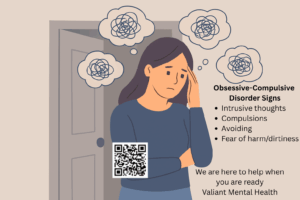
Obsessive‑Compulsive Disorder (OCD)
When Intrusive Thoughts and Urges Take Over
Obsessive‑Compulsive Disorder (OCD) is a real, chronic psychiatric condition characterized by unwanted, intrusive thoughts (obsessions) and repetitive behaviors or mental rituals (compulsions) performed to ease the distress those thoughts cause. This cycle can feel exhausting, disruptive, and all‑consuming — even when you know the thoughts don’t make logical sense.
OCD goes beyond “being neat” or “liking things a certain way.” It’s a condition that affects daily functioning, emotional well‑being, and quality of life. With evidence‑based treatment, many people experience significant relief and meaningful improvement in functioning.
What OCD Really Looks Like
Symptoms of OCD often fall into two categories:
Obsessions (Intrusive Thoughts)
These are persistent, unwanted thoughts, urges, or images that cause intense anxiety or discomfort, such as:
Fears of contamination or illness
Worries about causing harm to others
Intrusive taboo thoughts (e.g., moral or religious content)
Fear of losing control or doing something unacceptable
Compulsions (Repetitive Behaviors or Rituals)
Behaviors or mental acts performed to relieve obsession‑driven anxiety, including:
Excessive handwashing or cleaning
Checking locks, appliances, or safety repeatedly
Arranging or ordering items until they feel “just right”
Counting, repeating words, or performing mental rituals
You may know the behaviors don’t make sense, yet feel powerless to stop them — that’s a hallmark of OCD.
What Causes OCD?
There’s no single cause, but research suggests a mix of neurological, genetic, and environmental factors contributes to how OCD develops and persists. Imbalances in serotonin and related brain systems may play a role, and stressful life events can trigger or worsen symptoms. Family history of OCD or related disorders increases risk.
How OCD Is Diagnosed
OCD is diagnosed through a comprehensive evaluation by a licensed psychiatric provider, not through a quick online test. At Valiant Mental Health, assessments include:
Detailed clinical interview
Exploration of obsessions and ritual patterns
Functional impact on daily life, work, school, relationships
Screening for overlapping conditions like anxiety, depression, or trauma‑related symptoms
Accurate diagnosis ensures your treatment plan targets your specific symptom patterns.
Evidence‑Based Treatment for OCD
Effective OCD treatment almost always involves a combination of carefully chosen medication and structured therapy.
🧠 Therapy (First‑Line)
Cognitive Behavioral Therapy (CBT), specifically Exposure and Response Prevention (ERP), is considered the gold standard for OCD treatment. This approach gradually exposes you to triggers while teaching you manageable ways to resist compulsive responses — ultimately reducing the power of obsessions over time. If you’re looking for therapy, click here.
💊 Medication Management
Medications don’t cure OCD, but they can significantly reduce symptom intensity and make therapy more tolerable. Common medication classes include:
Selective Serotonin Reuptake Inhibitors (SSRIs) – often first‑line for obsessions and compulsions
Tricyclics (e.g., clomipramine) – only one approved for OCD, used when SSRIs are not enough
Augmentation options – atypical antipsychotics may be added when needed
Medications help regulate brain chemistry and anxiety levels so that your brain can better respond to therapy and behavioral change.
✔ Learn more about our collaborative approach to psychiatric medication management on our Medication Management page.
Telepsychiatry for OCD: Care On Your Terms
Many people with OCD find telehealth a convenient and comfortable way to receive ongoing psychiatric care — especially when symptoms make leaving home difficult or unpredictable.
Valiant Mental Health provides secure telepsychiatry appointments across states where telehealth psychiatric care is available, allowing you to build consistency with your provider from home.
➡️ Learn more about how telehealth care works on our Telepsychiatry page.
Insurance & Payment Options
Mental health care coverage varies by plan, but many people with OCD qualify for insurance‑covered treatment. Valiant Mental Health accepts most major plans and offers self‑pay options if needed.
For details about coverage, co‑pays, and benefit verification, visit our Insurance Plan page.
How Valiant Mental Health Supports You
At Valiant Mental Health, we approach OCD with evidence‑based clinical care and compassionate collaboration. You’ll work with a licensed psychiatric provider who:
Listens to your experience
Tailors medication strategies to your needs
Coordinates therapy referrals and follow‑up
Supports you through symptom challenges and progress
Recovery is a process — and you don’t have to manage it alone.
How Valiant Mental Health Helps Treat OCD
If you’re struggling with OCD, you don’t have to figure out the next steps on your own. At Valiant Mental Health, we take a practical, evidence-based approach to care—focused on helping you feel better and function better over time.
Your care plan is individualized and may include one or more of the following:
Medication Management
When appropriate, medication can play an important role in treating OCD. We focus on careful evaluation, thoughtful medication selection, and ongoing monitoring to balance symptom relief with side effects. Medication decisions are collaborative and adjusted based on how you respond—not a one-size-fits-all approach.
👉 Learn more about our Medication Management
Therapy
Many people benefit from therapy alongside or instead of medication. Evidence-based therapies—such as cognitive behavioral therapy (CBT) and related approaches—can help you develop skills to manage symptoms, reduce distress, and improve daily functioning. We work with you to determine whether therapy, medication, or a combination is the best fit.
👉 Learn more about our Therapy Services
Telepsychiatry
Care should be accessible. We offer secure telepsychiatry appointments so you can receive high-quality psychiatric care from the comfort of your home. Telepsychiatry allows for flexible scheduling and continuity of care without sacrificing clinical quality.
👉 Learn more about Telepsychiatry
Whether you’re newly seeking help or looking for a better treatment approach, our goal is to support you with clear guidance, professional expertise, and compassionate care—every step of the way.
Ready to Begin?
👉 Request an Appointment »
👉 Learn More About Medication Management »
👉 Explore How Telehealth Works »
You don’t have to leave home to start feeling better. Let’s take that first step together.
This page is intended for educational purposes and does not replace a professional psychiatric evaluation.
What Our Patients Are Saying
Valiant Mental Health is rated 5.0 stars on Google based on patient reviews.


Frequently Asked Questions
What are the main symptoms of OCD?
OCD is characterized by unwanted intrusive thoughts (obsessions) and repetitive behaviors or mental rituals (compulsions) performed to reduce anxiety.
How is OCD diagnosed?
Diagnosis involves a clinical interview, assessment of symptom patterns, and evaluation of how obsessions and compulsions interfere with daily life.
Can OCD be treated successfully?
Yes. Evidence-based treatment includes cognitive behavioral therapy, particularly exposure and response prevention (ERP), sometimes combined with medications like SSRIs.
Can obsessive-compulsive disorder be effectively managed through telehealth alone?
Yes, for many patients. Medication management for OCD, often using SSRIs at OCD-specific dosing, can be handled entirely through video visits, and therapy-based approaches can be added alongside medication when needed.
How is OCD different from generalized anxiety, and how does that affect treatment?
OCD involves specific intrusive thoughts paired with repetitive behaviors or mental rituals aimed at reducing distress, which often requires a different medication approach and dosing strategy than generalized anxiety, something your provider will factor into your treatment plan.